When I came out with my Caudalie vs Dupe article, I thought this would just be a fun little one time thing. To inspire people to do their own research into skincare ingredients. To find the science backed data behind them and really understand which ingredients are important when it comes to YOUR own skin type.
What I didn’t realize is that this boiled down to something more:
“The standard skincare companies have set: women NEED to buy these products in order to feel beautiful, young and attractive. ”
These messages often perpetuate the underlying toxic narrative that women must “fix” our natural skin. It reinforces the belief that aging, imperfections, or any deviation from flawless, airbrushed beauty is undesirable.
What message are we constantly seeing?
- “Anti-Aging” Obsession
- “Perfect Skin = Happiness”
- “Fix Your Imperfections”
- “Instant Results” Promise
- “Natural Isn’t Good Enough”
- “You’re Only as Beautiful as Your Skin”
- “Luxury is Necessary”
- “More Steps = Better Skin”
- “Hide Your Flaws”
Skincare companies are capitalizing on our deepest vulnerabilities and desires:
That your self worth is tied to flawlessness.
Now don’t get me wrong, I am a Botox girl. I do my 1-2x a year peels. 3x a year microneedling. Occasionally visit my favorite spa and get a relaxing facial. And I have also invested in Morpheus8 treatments.
Have I fallen victim to the “youthful = desirable” narrative? Yes.
But I have also learned that I can enjoy these things without them telling me if I am amazing. I am a fucking rad person, who just happens to like self care, skincare, beauty treatments. And that’s it.
So as I continue doing these deep dives and finding dupes for some of the these ”top of the line” skincare brands, make sure you remember the messaging behind the products.
Ask yourself: Am I buying this for the quality or the marketing?
Just a PS: more expensive ≠ better results. That is a big fat myth.
Today I am going in on a product that I have used many times…
The Elemis Papaya Enzyme Peel.
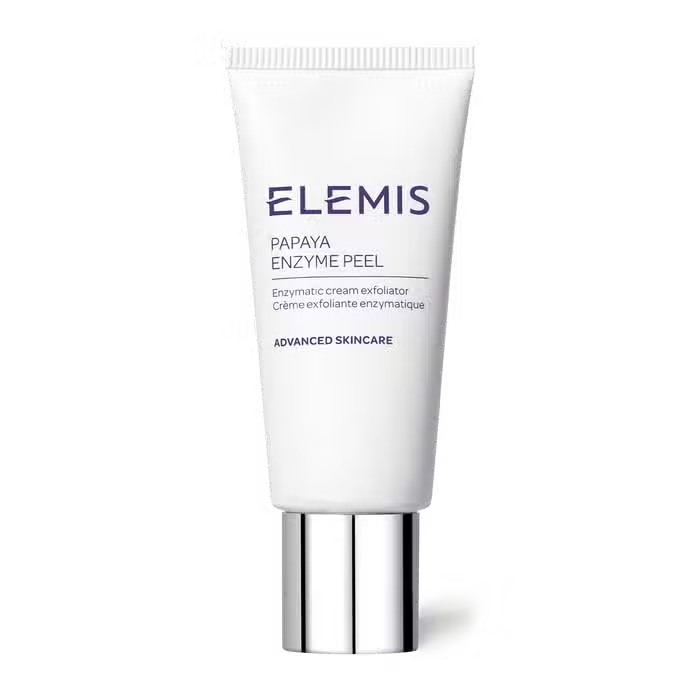
The first time I was ever introduced to Elemis was in 2014 when I was on a Royal Caribbean cruise to South America.
Of course that “Vitality of The Seas” spa experience motivated me to buy a bundle of Elemis products. To which I ended up obsessed with everything I used. At pretty penny I must add.
After repurchasing the Papaya Peel several times and had squeezed the last bit of product on my face, I decided to do a quick Google search and found something similar.
So I already have some personal experience with one of their dupes that I will mention today.
But there is also a BETTER dupe and I will disclose below.
Keep reading.
Elemis is considered “professional grade” skincare. And up until not too long ago, it could only be bought through retailers. For example; in spas and websites like The Derm Store.
But now it can be purchased at Ulta and Target.
Side note: I never recommend skincare products on Amazon. You honestly never truly know if you’re getting the correct product. There are always several reviews questioning the authenticity of skincare brands.
A lot of people, me included, find that they appreciate the natural formulation that Elemis uses.
But is the Papaya Enzyme Peel actually any different than store-bought brands? Or is the marketing behind “a spa like treatment” the reason women are obsessed with it?
So after a few women commenting on my skincare post on Threads asking me to review it. I jumped on board.
First…
There are no patented ingredients. So I didn’t have to go down that rabbit hole. Check.
So the next dive I needed to do was researching the most important ingredients that they advertised. I needed to find out all the reasons Elemis claim why this product is different and better than others.
In my opinion, their biggest claim is that they uses gentle, natural and effective ingredients that are safe enough for those with sensitive and dry skin. Which appeals to me, because that’s exactly what I have.
I used my research tool: ChatGPT 4-o. ((Remember don’t roll your eyes – I explained why I use this in the Caudalie article)).
The research came from 3 skincare formulation analysis sites and ingredient databases.
The important ingredients:
Papaya Fruit Enzyme (Papain): Papain is a powerful enzyme that breaks down proteins like keratin, helping to dissolve dead skin cells without the harshness of physical exfoliation. This process is key to revealing brighter, smoother skin, and it works particularly well for dull or acne-prone skin
Pineapple Extract (Bromelain): Like papain, bromelain is a natural enzyme that works to gently exfoliate the skin. It also has anti-inflammatory properties, helping to soothe the skin while clearing away dead cells and impurities
Bladderwrack (Fucus Vesiculosus): This seaweed extract is rich in minerals and antioxidants, offering significant hydration and anti-inflammatory benefits. It helps soothe and moisturize the skin, making the peel suitable even for sensitive skin types
Milk Protein: This ingredient helps nourish and calm the skin while promoting hydration. It plays a role in maintaining the skin barrier, which is especially important after exfoliation
Vitamin E (Tocopherol): Known for its antioxidant properties, Vitamin E protects the skin from free radical damage and helps repair the skin, making it an essential addition to a post-exfoliation formula
Important ingredients. Check. Check.
Next question:
“What are the dermatological studies and peer reviewed journals on the efficacy of these ingredients?”
Papaya: “Papain is widely studied for its protein-degrading capabilities, which makes it effective not only in wound care but also in removing dead skin cells from the surface. This enzymatic action helps accelerate cell turnover, which can improve skin texture and reduce dullness.”
Pineapple Extract: “Bromelain has been shown to have anti-inflammatory, anti-edematous (reducing swelling), and wound-healing properties. In skincare, bromelain helps to break down proteins, making it effective for exfoliating dead skin cells and promoting smoother, clearer skin.”
Bladderack: “Bladderwrack is rich in minerals, vitamins, and antioxidants that can protect skin from oxidative stress. Its anti-inflammatory and moisturizing properties make it beneficial for soothing irritated skin and promoting hydration.”
Vitamin E: “Vitamin E is a well-researched antioxidant that protects skin from free radical damage, improves moisture retention, and supports wound healing. It is effective at combating environmental stressors that accelerate aging, making it a key anti-aging ingredient.”
“These studies provide scientific backing for the efficacy of these ingredients, supporting their use in skincare formulations. They demonstrate how these natural enzymes and antioxidants function to gently exfoliate, hydrate, and protect the skin, making them ideal for sensitive or mature skin types.”
I like what I am reading. Elemis Papaya Enzyme Peel is certainly a product that seems to live up to what it advertises.
But my obvious next question:
What are comparable products, containing the same or similar ingredients, that are on the market today? I want to know medical grade, luxury and store bought options.
Medical Grade:
Obagi Professional-C Microdermabrasion Polish + Mask:
• Ingredients: Vitamin C, papain, and marine extracts.
SkinCeuticals Micro-Exfoliating Scrub:
• Ingredients: Papain, glycerin, and botanical extracts.
iS Clinical Tri-Active Exfoliating Masque:
• Ingredients: Papain, pineapple enzymes (bromelain), and vitamin E.
Luxury:
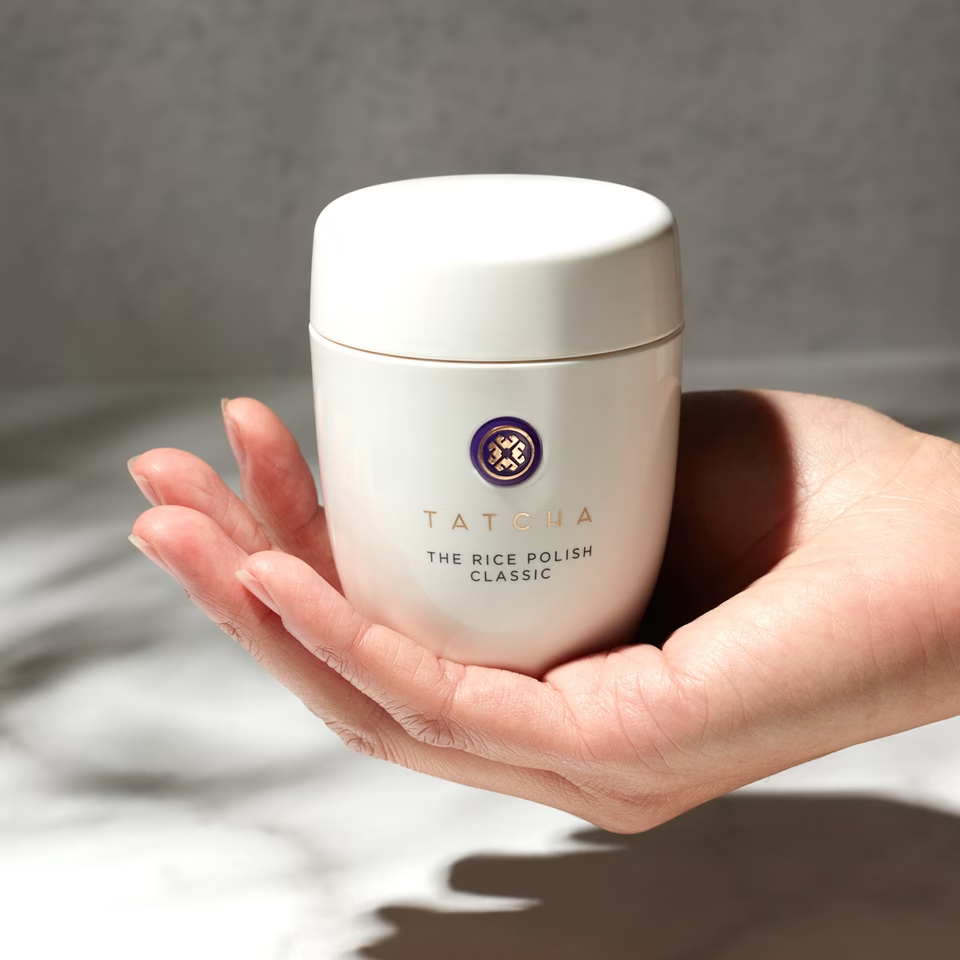
Tatcha The Rice Polish:
• Ingredients: Papain, rice bran, and green tea.
AmorePacific Treatment Enzyme Peel:
• Ingredients: Papain, green tea, and botanical extracts.
Store bought:
Andalou Naturals Pumpkin Honey Glycolic Mask:
• Ingredients: Pumpkin enzymes (rich in papain and bromelain), vitamin E, and honey.
Pacifica Glow Baby Peel Pads:
• Ingredients: Glycolic acid, lactic acid, papaya enzymes, and niacinamide.
Alba Botanica Hawaiian Papaya Enzyme Mask:
• Ingredients: Papaya enzymes, aloe vera, and botanical extracts.
Versed Doctor’s Visit Instant Resurfacing Mask:
• Ingredients: AHAs, BHAs, and pineapple (bromelain) enzymes.
Mario Badescu Enzyme Revitalizing Mask:
• Ingredients: Papaya and pineapple enzymes, vitamin E, and vitamin A.
Next question:
Which of these products have the same potency and effectiveness similar to Elemis?
For a gentle, daily-like exfoliation: Tatcha The Rice Polish and AmorePacific Treatment Enzyme Peel are comparable to Elemis, with similar gentleness and suitability for regular use.
For a stronger peel: Versed Doctor’s Visit Instant Resurfacing Mask and Andalou Naturals Pumpkin Honey Glycolic Mask are more potent, with added acids that boost exfoliation but may be too strong for very sensitive skin.
For similar results at an accessible price: Mario Badescu Enzyme Revitalizing Mask offers comparable enzyme potency, making it a good dupe for Elemis in terms of gentleness and results.
“Each product provides a unique twist, but Tatcha, AmorePacific, and Mario Badescu offer the most comparable experience in terms of gentle exfoliation, brightening, and hydration that align closely with Elemis Papaya Enzyme Peel’s balanced formula.”
Next:
Compare the price points of these products:
The Elemis Papaya Enzyme Peel – $49 for 1.7 oz.
Tatcha The Rice Polish – $68 for 2.1 oz.
• This enzyme powder is gentle enough for daily use, blending papain with rice bran and green tea antioxidants. Tatcha’s price point reflects its premium ingredients and suitability for sensitive skin.
AmorePacific Treatment Enzyme Peel – $60 for 1.7 oz.
• This powder-based enzyme peel, featuring papain and green tea, is a gentler option for daily use with antioxidant benefits. Although less potent, it’s slightly more affordable compared to Tatcha.
Versed Doctor’s Visit Instant Resurfacing Mask – $18-$20 for 1.7 oz.
• Versed’s mask combines AHAs, BHAs, and bromelain, providing a strong exfoliating effect. Its affordability makes it an appealing choice for a potent peel.
Andalou Naturals Pumpkin Honey Glycolic Mask – Around $15 for 1.7 oz.
• With glycolic acid and pumpkin enzymes, this mask is similar to Elemis in exfoliating strength and adds a moisturizing touch. It’s a very budget-friendly option, ideal for normal to oily skin.
Mario Badescu Enzyme Revitalizing Mask – $20 for 2 oz.
• With papain and bromelain, this mask provides a gentle exfoliation similar to Elemis, at an accessible price. It’s a good dupe for those looking for enzyme-based exfoliation at a lower cost.
Next question?
Out of all of these products, which brand is the most natural in comparison to Elemis?
• Natural Ingredients: Tatcha is known for its use of natural ingredients like rice bran, green tea, and papain. It is free from synthetic fragrances and is largely based on botanical actives, making it quite comparable to Elemis in terms of naturalness.
Mario Badescu Enzyme Revitalizing Mask:
• Natural Ingredients: This product contains natural enzymes like papain and bromelain alongside vitamins A and E, giving it a similar natural base to Elemis. It also avoids harsh chemicals, making it a good natural alternative.

These two are the only brands that offer natural ingredients. Every other brand has some synthetic, though very small, ingredients in their product.
So there you go…
If you would like a more luxury product, the Tatcha Rice Polish is a good comparison.
And if you would like a more budget friendly product, the Mario Badascu Enzyme Mask is the closest comparison.
Where are my oily skin girls?
I’ve got you!
The CLOSEST store bought dupe I have found is the Peter Thomas Roth Pumpkin Enzyme Mask.

It is much stronger and more aggressive than the Elemis Enzyme Peel.
Peter Thomas Roth Pumpkin Enzyme Mask – $60. 5.1 oz.
As you can see you get A LOT more product for the price.
Remember:
This is about finding more affordable and accessible dupes of some of the best luxury skincare brands.
If you can afford higher end products, that is awesome.
But if you want to ball on a budget, I’ve got your back.
As always:
This is about you researching ingredients in your products and being able to make informed decisions. Why would you want to purchase items at higher price points, if there is a very comparable product that is much more wallet friendly?
Oh! And if you already have the Elemis Papaya Enzyme Mask, don’t throw it out and head to your local Target to get the Mario Badascu Mask.
We are mindful. We don’t waste. We finish what we have.
Even though I am 100% guilty of good marketing and will run out and buy the next best thing. I don’t even want to count the number of shampoo and conditioner bottles I have never finished, but went out and bought what my stylist recommends.
The beauty industry thrives on selling us ideals of youth and perfection, often convincing us that more expensive means better.
But as I have gone back and done this research, you can get the same skincare benefits at various price points. All without sacrificing quality or results.
This is about balance: indulging in what makes us feel good, but never letting it define our worth. The most important skincare product you can ever invest in is knowledge. Knowing your skin, the ingredients, and the marketing tactics at play.
Oh and you don’t need a $60 mask to glow; you’ve already got everything you need to shine right within you.
Disclaimer:
I am not an affiliate of ANY skincare product. This is purely out of hobby and fun. If that changes, I will be upfront and disclose immediately.
Alright. I’ve done my job.
If you’d like your favorite skincare product reviewed and compared, drop the brand in the comments below.
See ya in the next article.
Much love,



One response to “Elemis Papaya Enzyme Peel vs The Dupe”
[…] you haven’t checked out my other dupes you can read about my Caudalie article or my Elemis article. Those who like science-backed data will really enjoy […]